Every Journey South Has a Story
Women of Antarctica is a writing and oral history project exploring the stories of women who have lived and worked in Antarctica and the sub-Antarctic — what took them there, what life was really like, and what the experience has meant in the years since.
I'm speaking with women across different generations, professions and Antarctic experiences. Scientists and station leaders are part of that story, but so too are tradespeople, medical staff, cooks, communications specialists, pilots and aircrew, ship's crew, field workers, support staff and the many other women whose lives have intersected with the continent.
I'm interested not only in what these women did in Antarctica, but in what the experience meant to them.
Why Antarctica?
Antarctica has been quietly weaving its way through my own life for more than 25 years. I can't remember exactly when the fascination began, but I clearly remember when it became something more. In 2001, I attended a psychology conference where explorer Tim Jarvis and psychologist Professor Peter Suedfeld spoke about Antarctica and the psychology of people who venture into extreme and isolated environments. I was captivated.
At the time, I was serving as a psychologist in the Army Reserve. I subsequently wrote a Captain's Paper examining the reintegration of Antarctic expeditioners after returning home, which led me to begin a PhD exploring Antarctic psychology. Life eventually took me in other directions and I didn't complete the PhD, but my fascination with the people who live and work in Antarctica never disappeared.
Going South
In 2003, I was offered the opportunity to travel to Antarctica as a debriefing psychologist with the Australian Army Psychology Corps. Personal circumstances meant I reluctantly declined. I remember thinking I had probably just turned down my one opportunity to ever go south.
Fortunately, I was wrong.
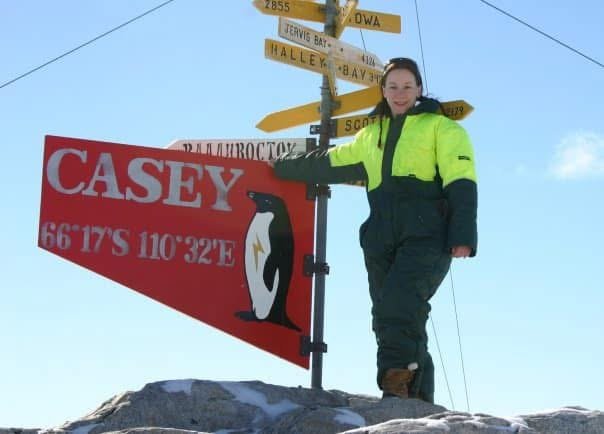
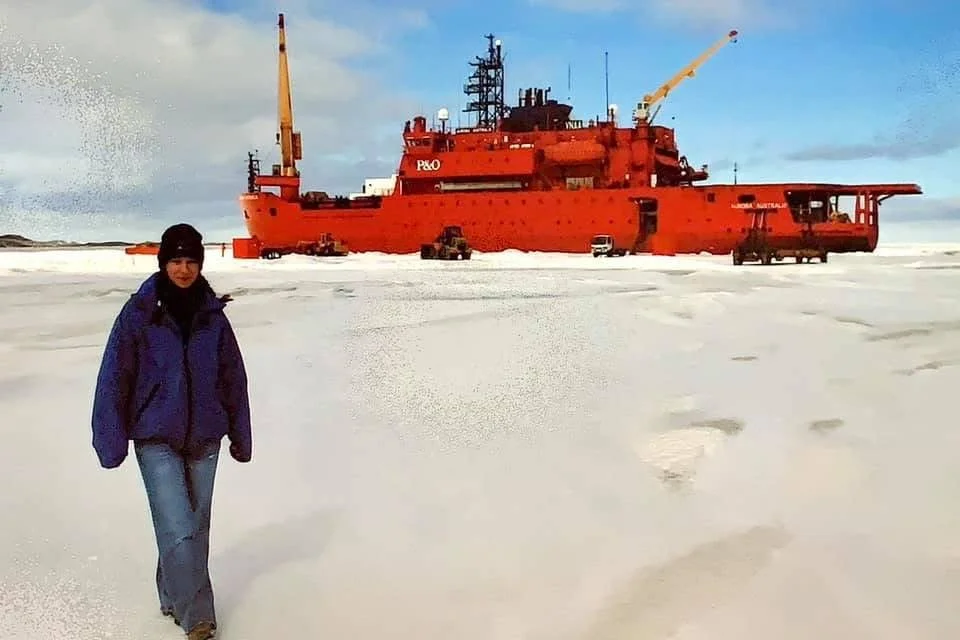
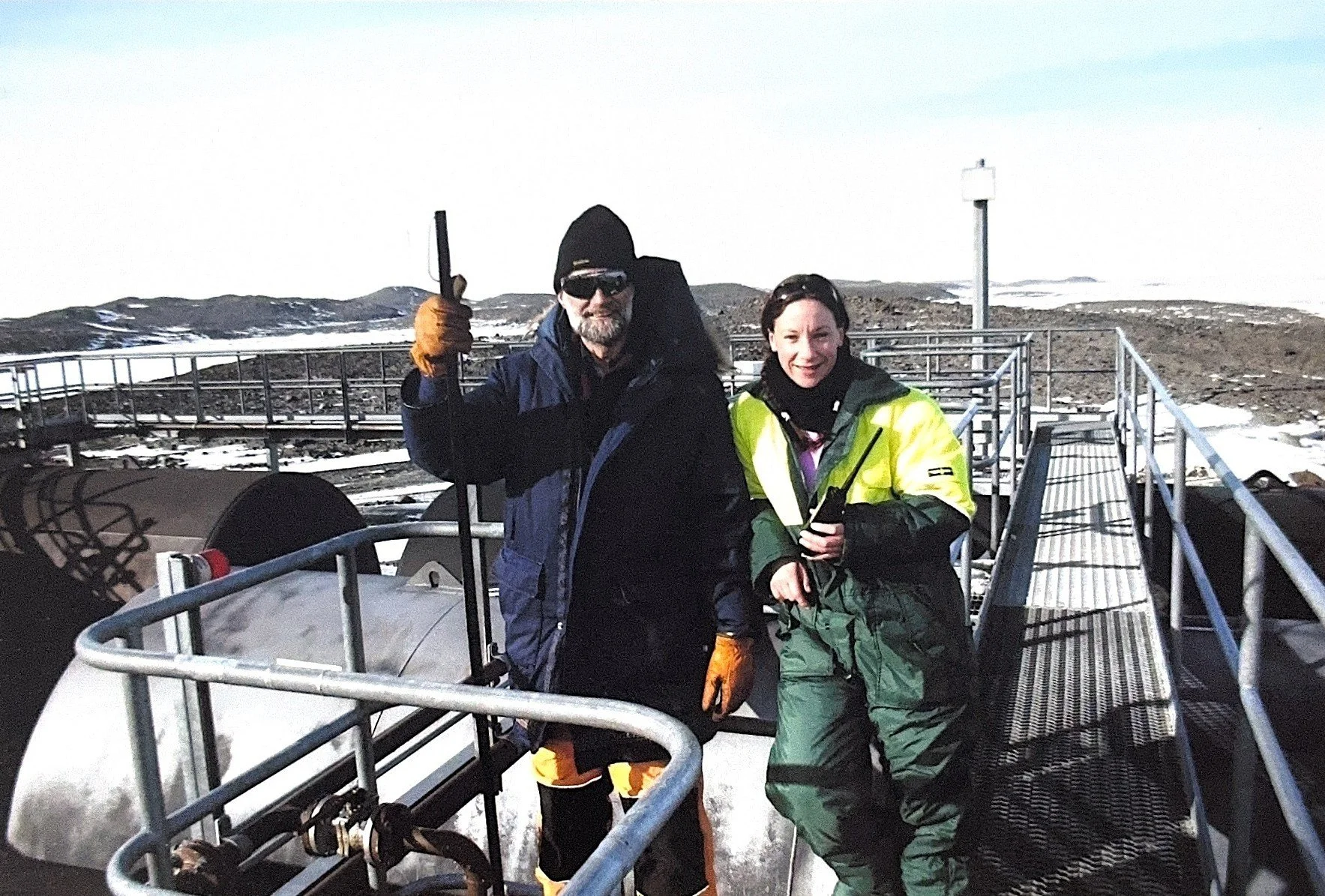
In 2006, I boarded the Aurora Australis as a debriefing psychologist for a seven-and-a-half-week voyage south. The ambitious voyage had been dubbed "Mission Impossible" because of the plan to reach all four of Australia's Antarctic and sub-Antarctic research stations — Mawson, Casey, Davis and Macquarie Island — at that time of year. I was fortunate to visit Casey and Davis.
Like so many people who travel south, I discovered that Antarctica has a way of staying with you long after you leave. It certainly stayed with me.
Finding My Way Back
Over the years, Antarctica continued to surface in different parts of my life. Since 2019, Antarctica has also found its way back into my professional life. Through my work as a psychologist, I conduct psychological suitability assessments for people seeking to live and work in Antarctica with the Australian Antarctic Program.
But another Antarctic thread had been waiting quietly in the background. Around 20 years ago, I began writing about women in Antarctica. I recently rediscovered some of those early pages. I don't really know why I didn't pursue the idea then. Perhaps I simply wasn't ready.
Now I am.
The Stories I'm Looking For
I'm not beginning Women of Antarctica with a predetermined story about what Antarctica does to people. I want to listen. What drew these women south in the first place? What did they imagine Antarctica would be like — and what was life there actually like? What challenged them? What surprised them? What made them laugh? Who mattered to them? What do they remember when they close their eyes and think about Antarctica now?
I'm equally interested in what happened after they came home. Did Antarctica change anything about how they saw themselves or the lives they wanted to lead? Did it influence their relationships, careers, confidence, priorities or appetite for adventure? Did its significance change as they grew older? Or was it simply one remarkable chapter in a much bigger life?
All of those stories matter.
Why These Stories Matter
Women have been part of the Antarctic story for generations, yet much of the traditional narrative of Antarctic exploration has centred on the experiences and achievements of men.
Women of Antarctica seeks to preserve another part of that history — not simply by recording what women did, but by listening to what the experience meant to them. I hope these stories will contribute to our understanding of women's Antarctic history while also exploring something broader and deeply human: our relationships with adventure, identity, connection, challenge and meaning.
After more than 25 years of being fascinated by Antarctica, these are the stories I most want to understand.
Share Your Story
If you're a woman who has lived or worked in Antarctica or the sub-Antarctic — whether recently or many decades ago — I'd love to hear from you.
You don't need to have done something famous, broken a record or think of yourself as an explorer. I'm interested in the real stories: the extraordinary and the ordinary, the difficult and the joyful, the profound and the ridiculous. And if you know a woman whose Antarctic story deserves to be heard, I'd be very happy to hear from you too.
Every journey south has a story. I'd like to help preserve some of them.